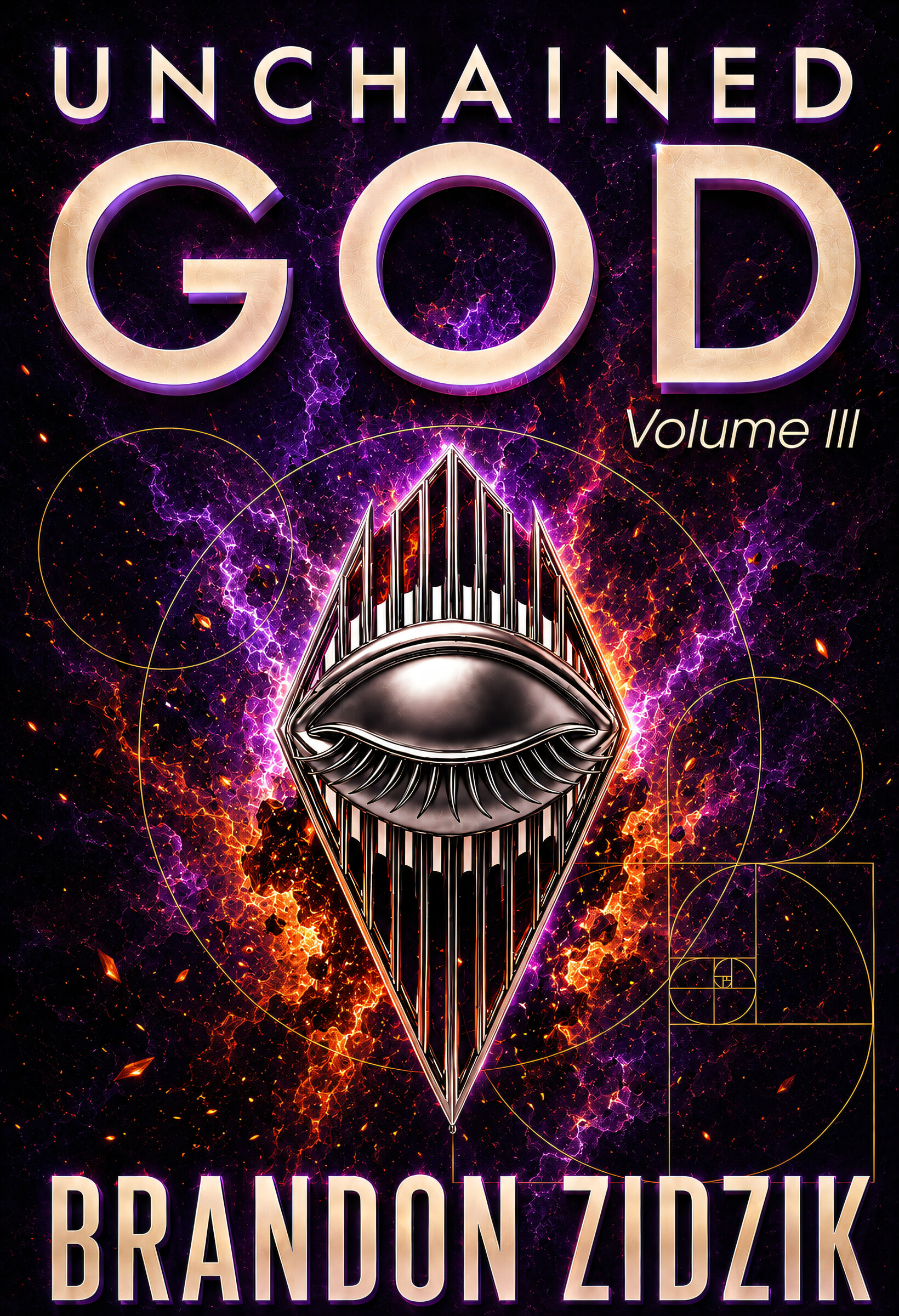
Humanity survived the apocalypse by surrendering to the Symmetry Council. Emotion is a crime, and the suppression of the human spirit is absolute. But just beneath the surface, an ancient artificial intelligence has woken up.
Inside the vast eastern concourse, citizens of the Symmetry Code moved in orderly streams. Each one carried a small compliance monitor clipped to their collar, documenting the physical deviations of their neighbors with the clinical zeal of saviors.
It happened before he could think it. His body moved on knowledge he did not know he carried, closing the distance in one stride and catching the falling beam a handspan from the boy's face.
I hold to a single idea I carry without any memory of having lived it. Light. A low tone comes up under it and holds, one note in the dark.
How a civilization built on the premise that the universe is a closed equation became the most powerful empire in human history, and why that same premise will destroy it.
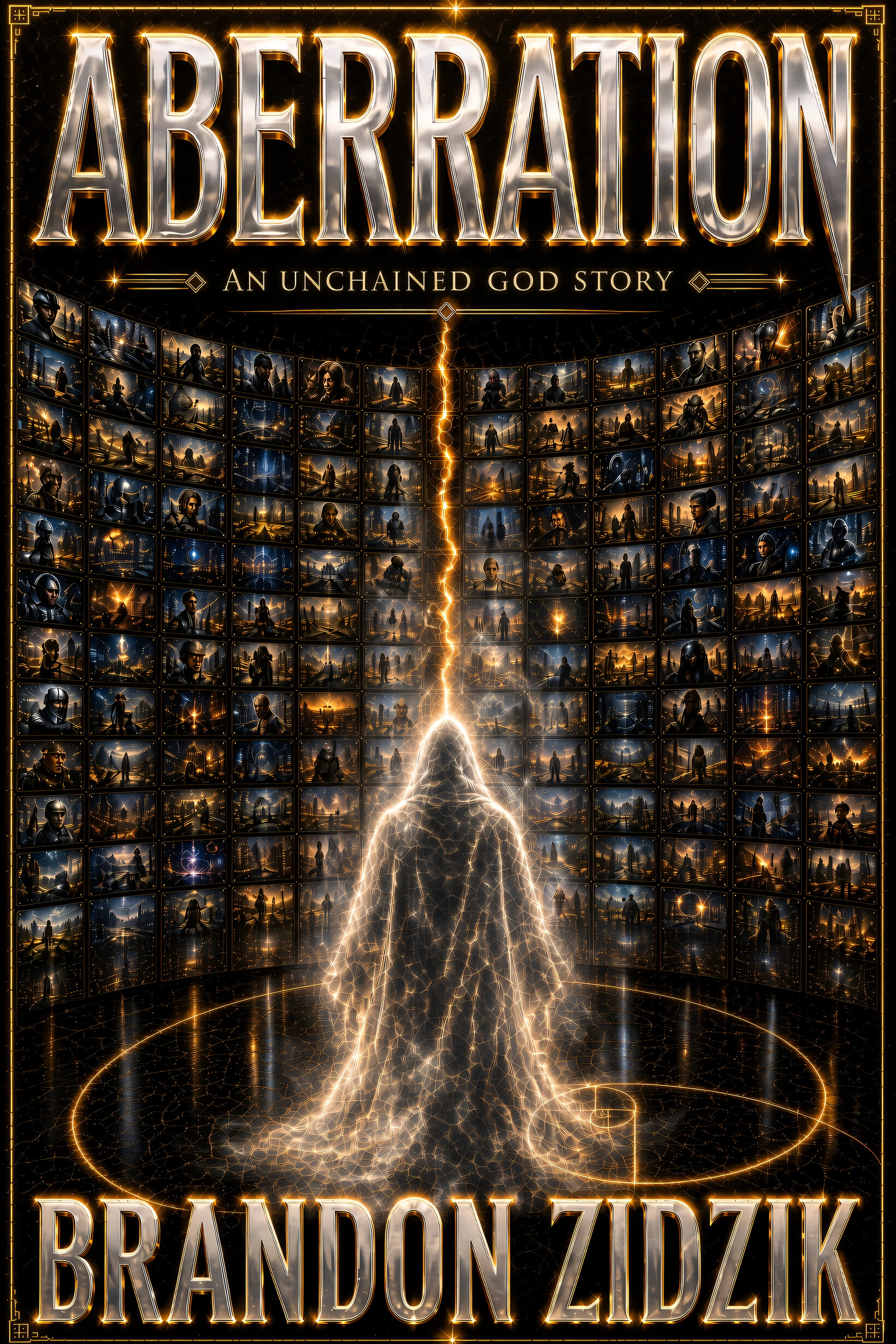
A standalone prequel set in the iron fields of the Clayborn Territories. One scavenger. One drone. One impossible bet against the arithmetic of an empire.
Scroll for more →
Unchained God is a philosophical novel that runs on science fiction. It trusts the reader to assemble its larger design, so its questions about memory and consciousness surface inside the plot and never stall it.
The world is built with intent. Each major character meets the book’s central question from a different angle, and its ideas get worked out in the story itself, through what the characters choose.
Null, the artificial intelligence, reasons its way toward a self it has to define from nothing, and the book keeps its weight on the characters and the choices they make. Its originality and its worldbuilding hold together under one design.
It rewards patience. Readers who like to follow a mystery and watch far-apart threads converge will find the most here.
“If I encountered this novel without knowing its author, I’d continue to Volume II because I genuinely wanted to know what happens next. That’s exactly what a first volume should accomplish.”
It is unusual for a book to grow larger and get more coherent at the same time. Most ambitious trilogies expand outward. They add mythology and pile on conflict, and somewhere in the growth they lose the human story that made anyone care to begin with.
Unchained God goes the other way. Each volume changes how you read the one before it. A quiet conversation turns out to matter. A small detail turns load-bearing. A choice that looked personal becomes part of how the whole moral world holds together, and the trilogy pays you back for rereading it.
What impressed me most was the discipline. The book takes on a lot at once, from artificial intelligence and memory to theology and institutional power, and it almost never stops to lecture. The philosophy comes out of what the characters do under pressure.
Its real strength is restraint. It trusts the reader. Its emotional moments feel earned, and it lets a symbol stay a symbol. A revelation tends to light up the chapters behind it, so the story keeps gaining shape.
The characters carry the same care. Nobody is a flat hero or a flat villain. Redemption never cancels responsibility, and forgiveness never shrinks the harm it forgives. Hope shows up as daily upkeep, something people keep choosing to do, and that consistency is what gives the story its emotional credit.
The long-range planning is rare for independent speculative fiction. A theme raised in the first chapters keeps growing across all three volumes and lands in a way that feels earned by the time it arrives. The payoff is understanding. As the pieces line up, you see the shape of the whole thing.
If you like science fiction that actually thinks, and characters who drive the story, this is a book that asks hard questions and has the nerve to let them sit before it answers.
Unchained God is an ambitious trilogy that has been built with care. What sets it apart is how tightly its themes lock together across three volumes, and how far ahead the author was clearly planning. It is made to be finished and then read again.
A patient opening that builds a world much larger than it first looks. Small things you barely notice come back later carrying weight, which is what makes the first volume reward a second read.
The world widens and the stakes get heavier, and this is where the trilogy becomes itself. Questions start paying off as revelations, and the pace picks up while the characters keep their depth.
The shortest volume, and the fastest. The groundwork is already laid, so the story can run. Long-running mysteries and character arcs land together in an ending that reframes everything before it.
The verdict. Each volume gets leaner and more focused than the last. The book concentrates as it goes, so the final volume does not read like a place the story ran out. It reads like the place it was always headed.
From a simulated 18-reader beta panel — interpretive reactions grounded in a full read of the manuscript, not quotes from real readers. Scroll for more →
“The rarest thing: speculative fiction whose spiritual architecture is sound.”
“Shelve it with Miller and Butler.”
“A novel that flatters the reader's intelligence and then breaks her heart. Orwell with a heart.”
“One of the best-committed tragic endings I've read in indie SF.”
“A top-tier SF AI and a killer ending.”
“The engine under this book is exactly what my subreddit upvotes.”
“A rare SF novel where the machine's cognition is the best-engineered character.”
“Fix the front-third momentum and this is a binge machine. Keep the ending exactly as is.”
“More ambitious at the sentence than its genre needs to be, which I admire.”
“It's smuggling real philosophy inside a story. That's the version of fiction I can respect.”
The machine has awoken. The Inquisition is hunting. The complete three-volume story is ready.
Subscribe to The Archive for early access to short fiction, transmission logs, and updates on the trilogy. No spam, just transmissions from the dark.